
A Clear Guide for Businesses and Municipalities
As organizations sharpen their sustainability goals and search for reliable decarbonization solutions, renewable natural gas (RNG) has emerged as one of the most practical, scalable, and economically viable options. Yet for many businesses and municipalities, the technology behind RNG—and what it actually means in practice—can feel complex.
GreenGas’ guide breaks down RNG in clear terms, explaining what it is, how we produce it, and why it’s increasingly central to both corporate sustainability strategies and community infrastructure planning.
What Is Renewable Natural Gas?
Renewable natural gas (RNG), also known as biomethane, is a clean, low-carbon energy source derived from organic waste materials. It is chemically identical to conventional natural gas but produced from renewable, continuously replenished sources such as:
- Agricultural waste (manure, crop residuals)
- Food waste from processors and retailers
- Municipal wastewater
- Landfills and organic municipal solid waste
- Industrial byproducts
Instead of emitting methane—a greenhouse gas more than 25x more potent than CO₂—into the atmosphere, GreenGas’ RNG production captures it, cleans it, and repurposes it as usable energy.
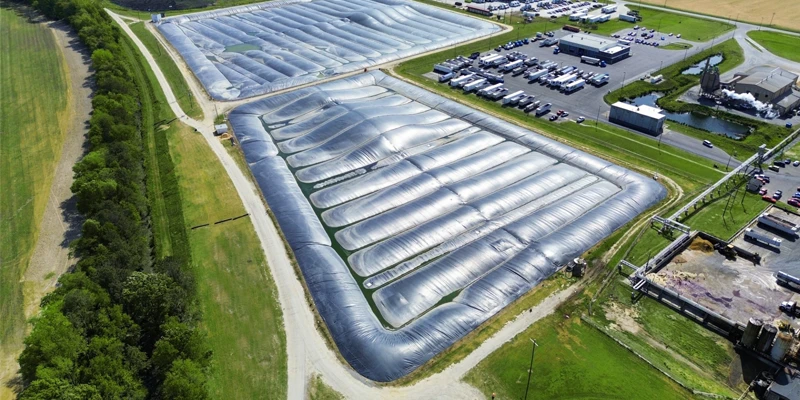
How GreenGas’ RNG Is Produced: From Waste to Pipeline-Ready Fuel
GreenGas’ RNG process is straightforward, though highly engineered. It typically includes:
1. Collection of Organic Waste
Waste streams from farms, food processors, wastewater treatment plants, and landfills are aggregated and directed into a production system.
2. Anaerobic Digestion or Gas Capture
Microorganisms break down organic matter in an oxygen-free environment, producing biogas. In landfills, methane is captured through well systems.
3. Upgrading to RNG
The raw biogas is purified to remove carbon dioxide, moisture, hydrogen sulfide, and other impurities. The resulting product—biomethane—meets pipeline and commercial gas standards.
4. Injection, Transport, and Use
Once upgraded, GreenGas’ RNG can be:
- Injected into existing natural gas pipelines
- Transported to injection hubs
- Used directly in industrial processes
- Utilized for fleet fueling
- Converted into electricity or thermal energy
Because RNG is chemically identical to fossil natural gas, it integrates seamlessly with existing systems.
Why Businesses Are Turning to GreenGas for RNG Production and Purchasing
Organizations across food production, manufacturing, distribution, and other sectors are turning to RNG because it:
- Helps Meet Decarbonization Goals – GreenGas’ RNG has one of the lowest carbon intensities of any fuel. In some cases, our gas is carbon-negative due to high levels of avoided methane emissions.
- Provides Energy Reliability – GreenGas’ RNG can be produced year-round, stored, and delivered through existing natural gas networks—ensuring both stability and scalability.
- Converts Waste Into Revenue – For companies that generate organic waste, GreenGas’ projects can lower disposal costs, create new revenue streams, and increase operational efficiency
- Supports ESG and Regulatory Compliance – With growing pressure from customers, investors, and regulators, GreenGas’ RNG process is a straightforward way to demonstrate measurable sustainability performance.
Why Municipalities Are Adopting RNG
Cities and counties face rising operational costs, environmental mandates, and community expectations. RNG directly supports municipal priorities:
- Reduces Methane Emissions – Converting wastewater, landfill gas, or organic waste into RNG helps municipalities significantly cut greenhouse gas emissions.
- Cuts Operating Costs – RNG systems can offset energy use in public facilities, from wastewater treatment to fleet fueling.
- Strengthens Local Infrastructure – RNG projects create local jobs, generate revenue, and extend the life of landfills by reducing organics.
- Supports Long-Term Sustainability Plans – RNG is a practical component of climate action plans and circular economy initiatives.
The Bigger Picture: RNG’s Role in a Low-Carbon Future
RNG is more than just an alternative fuel—it represents a smarter way to manage waste, reduce emissions, and create value. It supports:
- Carbon-neutral manufacturing
- Clean transportation solutions
- Resilient municipal systems
- Scalable decarbonization across industries
The Bottom Line
As the demand for practical, cost-effective decarbonization grows, RNG has become a powerful tool for organizations looking to accelerate progress without overhauling existing infrastructure. Whether you’re a business seeking to reduce emissions or a municipality aiming to strengthen sustainability programs, GreenGas offers a clear, proven path forward.
Contact GreenGas today to partner! By converting waste into clean energy and carbon-reduction pathways, we are empowering the world’s leading sustainable companies to achieve real environmental impact – and help industries everywhere capture the full potential of their resources.